Showing posts with label Curriculum Development. Show all posts

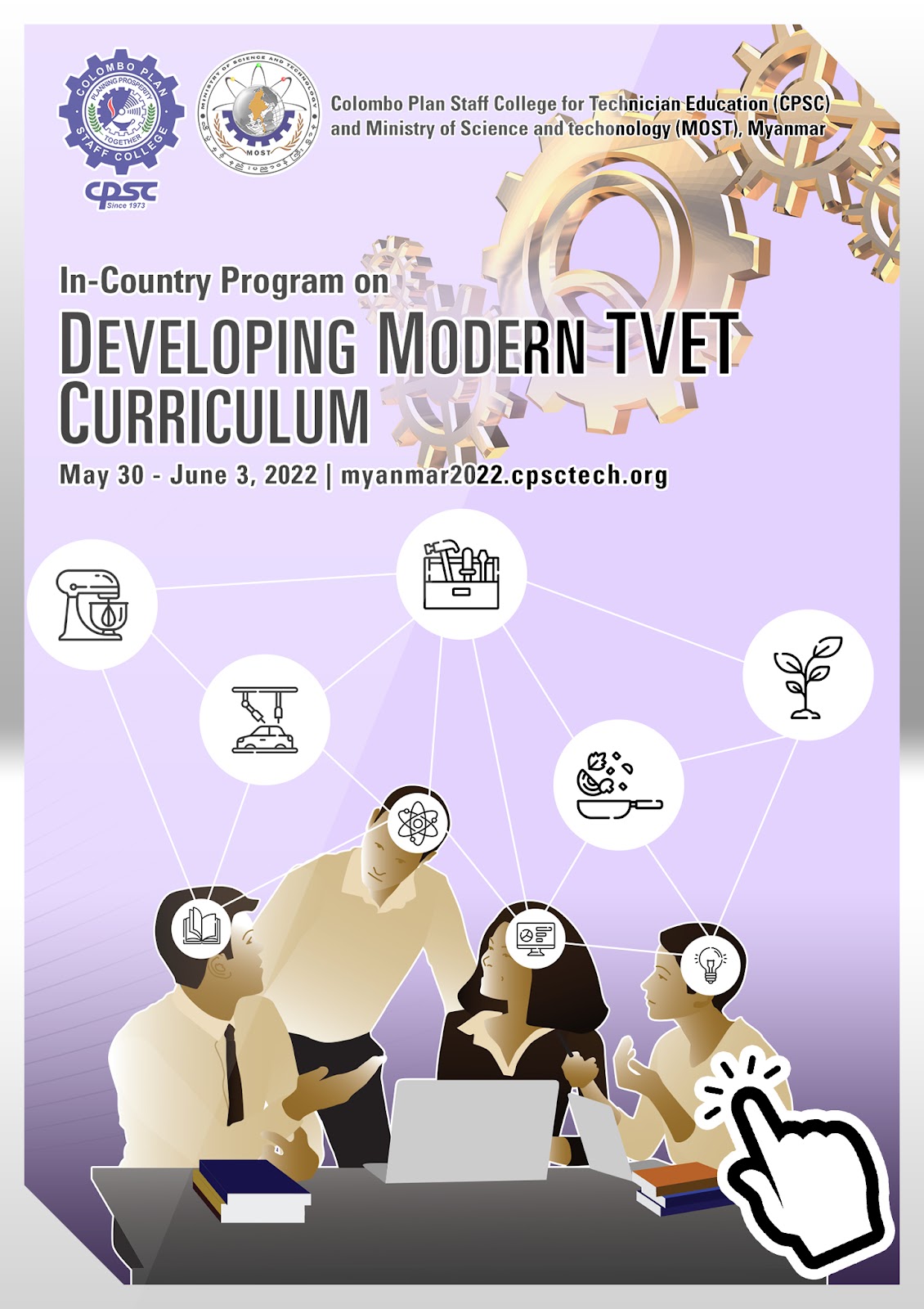
Developing Modern TVET Curriculum

Date: May 30 - June 3, 2022 /
Program Type: In-Country Program /

Main Contents

Special Lecture: Skills Development for the Post-COVID Digital Economy. This special lecture will contribute to ongoing discussions on how the pandemic and emerging technologies are transforming job markets, determining new skills sets requirements and driving the digital economy.


Theme Papers


  • Theme Paper 1: Understanding Competency-Based Training. The first theme paper provides an overall understanding of key CBT concepts and practices. Definitions of competence, qualifications, and qualifications framework as well as CBT processes and structures will be discussed.
  • Theme Paper 2: Identifying Priority Occupations. The second theme paper discusses this first stage of CBT and its two steps: skills needs assessment and training needs analysis. Skills needs assessment identifies the differences between the skills required – by whom, for what job, for which product or service market, in what quantity, and when – and the training available – for which population, at what cost, for what job and for which product or service market. Training needs analysis refer to the technical and vocational skills gaps that need to be addressed to employment in the labour market.
  • Theme Paper 3: Identifying competencies. The third theme paper explains the three-step process of identifying the competencies and competency standards that will later be used by learners and training providers. The steps include: (a) identifying competencies using occupational analysis; (b) verifying the occupational profile; and (c) developing competency standards.
  • Theme Paper 4: Designing CBT Programmes. The fourth theme paper illustrates the actual processes of designing CBT programmes. The paper describes the procedures of developing curriculum and learning tools as well as the designing CBT for workplace-based learning
  • Theme Paper 5: Developing a Curriculum Framework. The fifth theme paper explains how competency standards are transformed into a curriculum framework. The framework consists of the module design with learning outcomes and content, teaching and learning strategies, assessment criteria and modes of assessment. The paper also details the translation of the curriculum framework into learner guides that will form the basis of training delivery. Instructions on designing job sheets and session plans will also be tackled in this paper.

Group Work


  • Group Work 1. Brainstorming on the Implications of the Digital Economy Megatrends to Skills Demand and Supply
  • Group Work 2. Developing a DACUM Chart
  • Group Work 3. Writing a Unit of Competency
  • Group Work 4a. Writing Program Design
  • Group Work 4b. Writing Learning Outcomes
  • Group Work 4c. Developing Learning Tools
  • Group Work 5: Presenting the Curriculum Framework

Innovation in Curriculum Development Integrating ICT and Digital Skills

Date: February 15-19, 2021 /
Program Type: Online Regional Program /

Main Contents

Presentations


  • Special Lecture: Management of Curriculum Development in TVET
  • Theme Paper 1: Concept of Curriculum, Process and Methods of Curriculum Development
  • Theme Paper 2: Conduct DACUM using ICT tool
  • Theme Paper 3. ICT & Digital Technology in Course Development Processes
  • Theme Paper 4: Develop Curriculum incorporating different cross-cutting components/21st Century Skills

Project Tasks


  • Project work 1: Develop a curriculum structure using the customized format
  • Project work 2: Use ICT to develop TVET courses
  • Project work 3: Develop a curriculum framework to integrate different cross-cutting components/21st Century Skills
  • Project work 4: Develop an Action Plan for Development of Curricula integrating ICT and Digital Skills


Effective Methods of TVET Curriculum Development to Integrate 21st Century Skills

Date : September 21-25, 2020 /
Program Type: Online Program /

Main Contents

Theme Papers


  • Special Lecture: Ensuring 21st Century Skills for the Global Competitiveness and Innovation in the TVET
  • Theme Paper 1: Concept of Curriculum and development process
  • Theme Paper 2: Effective Methods of Curriculum Development
  • Theme Paper 3: ICT & Digital Technology in Course Development Processes
  • Theme Paper 4: Curriculum Design and Framework incorporating 21st Century Skills

Projects Tasks


  • Project work 1: Develop a curriculum structure (format) to be adopted by TVET institutions
  • Project work 2: Examine different methods of curriculum development to be selected for the TVET program
  • Project work 3: Use ICT to develop TVET courses
  • Project work 4: Develop a curriculum framework integrating 21st century skills
  • Project work 5: Develop action plan to integrate 21st century skills

Online Exam


Test Items Development Techniques for TVET Teachers

Date: Apr 27, 2020 /
Program Type: Webinar /

Webinar Presentation


Background and Focus


Given the current rapidly-evolving situation with COVID-19, CPSC likes to take this opportunity to reassure that it will continue to deliver programs through the WEBINAR to the valued TVET stakeholders. As a Face-to-Face training is not possible, on-line training is the best solution which is also cost effective and time saving.


A webinar is an online seminar that turns a presentation into a real-time conversation from anywhere in the world. Webinars allow large groups of participants to engage in online discussions or training events and share audio, documents or slides – even when they’re not in the same place as the meeting host or in the same room where the event or presentation is taking place.


This concept paper is prepared for the next webinar topic “Test Items Development Techniques for TVET teachers”. At present, all reputable assessments carried out in TVET systems are competence-based assessment. Assessments are only relevant for the workplace if it has consider prevalent knowledge, abilities and skills which are required in work-based situations.


Assessment provides information that can help improve students’ learning and help teachers in teaching. The role of classroom assessment is to improve students’ learning and teachers’ teaching in order to ensure that students reach their individual potential. Teachers, therefore, generally understand that assessment is integral to teaching. Thus, TVET teachers need to know how to develop test items, administer tests, assign grades as per the results of tests, and report the outcomes of the tests to the concerned authority. Teachers should be able to integrate assessment and teaching to make the teaching process more interesting and to enhance the students’ learning outcome. Teachers need to create and provide opportunities for all students in which students can progress at their own pace and remedial measures need to apply where necessary. After testing a constructive feedback should be given to students based on the ability of individual students to refer to the standard criteria rather than student achievement.


Thus, there are different test items need to be developed by a TVET teacher in order to test students achievements and diagnose learning problems. Those test items are based on Skills, Knowledge, and Attitudes (Soft Skills) which are taught to the students and test is conducted only after students have adequately practiced the skills. Test items need to be developed differently for each domain of learning and there are specific process of developing each test item.


Thus, CPSC is looking forward to this webinar on “Test Items Development Techniques for TVET Teachers” and meet all the CPSC member countries participants & discuss about it. It is hoped that this experience will enable us to think and act differently on development of test items, administrating, and produce tests results in TVET institutions.


Objectives


At the end of the webinar, the participants are expected to:


  • Bring CPSC member countries participants in one online platform
  • Understand the TVET Assessment System
  • Be familiar with the types of test items
  • Internalize the process of development of each test item
  • Formulate strategies on adopting test items development process

Facilities Required


To join the webinar, each participant should have the following:


  • Minimum 2Mbps Broadband Internet
  • Desktop/Laptop Computer or Mobile Device with Earphones and Mic
    • Chrome Browser or any HTML5 Compliant Browser
    • Google Account (Gmail) for Hangouts Meet

Lesson Plan Development for TVET Teachers

Date: Apr 15, 2020 /
Program Type: Webinar /

April 15, 2020 | 9:30am Afghanistan | 10:00am Maldives, Pakistan | 10:30am India, Sri Lanka | 10:45am Nepal | 11:00am Bangladesh, Bhutan | 11:30am Myanmar | 12:00nn Thailand | 1:00pm China, Malaysia, Mongolia, Philippines, Singapore | 3:00pm Papua New Guinea | 5:00pm Fiji


Webinar Presentations


Background and Focus


CPSC is committed to developing and enhancing the technician education systems of its member countries through the quality education and training in TVET. However, the whole world is nowadays facing an acute pressure due to COVID -19 issue. CPSC therefore wish to continue its efforts towards its commitment as stated above and accordingly take this opportunity to deliver its training program through online mode viz. WEBINAR for the benefits of its stakeholders.


A webinar is an engaging online event where a speaker, or small group of speakers, deliver a presentation to a large audience who participate interactively through a real-time conversation by submitting and responding questions, and using other available interactive tools. Thus, a webinar is a presentation, lecture, workshop or seminar that is transmitted over the Web using video conferencing software. A key feature of a Webinar is its interactive elements i.e. The ability to give, receive and discuss information in real-time.


There are many sayings or aphorisms in education, great words of wisdom, and sincere advice from countless sources. It is needless to say that the best and effective teachers are good planners and thinkers. The success of professional teachers doesn't "just happen." The road to success for teachers requires commitment and practice, especially of those skills involved in planning lessons and learning activities, and in managing classroom behavior. Planning lessons, though its implementation being a long-time activity, is a fundamental skill all teachers must develop and improve consistently and fall under the core skills of a teacher.


For a TVET System to be able to play its role effectively, it is important to ensure that there exits an enabling and TVET friendly environment that can be achieved by putting in place harmonized teaching and learning environment through appropriate instructional design and appropriate teaching strategy. Therefore, creating a lesson plan is an important aspect of instructional design. A lesson is an organized set of activities designed to present one manageable sized piece of an academic course content and is different than the lecture. The purpose of a lesson plan is really quite simple; it is to communicate. The lesson plan is to guide TVET teacher in organizing learning material and himself for the purpose of helping students to achieve intended learning outcomes.


Thus, a key principle in creating a lesson plan is specificity. Lesson plans allow the TVET teachers to create and articulate learning objectives, organize and deliver course content, and plan and prepare learning activities and materials. It also outlines the type of informal or formal assessment methods, that TVET faculty will use in their classrooms. It is also an effective instrument to implement the TVET curriculum for achieving specific educational goals and objectives and check whether the desired outcomes are clear and specific in behavioral and observable terms with focus on products or ends.


In this context, this Webinar on the topic, “Lesson Plan Development for TVET teachers” has been planned for the TVET teachers of all member countries to discusses some of the basic concepts, principles and to explore the approaches for building and developing an effective lesson plan.


Objectives


  • To offer online training seminar for TVET teachers of CPSC member countries.
  • To understand the importance of the concept of lesson plan development in TVET.
  • To share the components/elements of lesson plan.
  • To develop a lesson plan for the given content of TVET.

Facilities Required


To join the webinar, each participant should have the following:


  • Minimum 2Mbps Broadband Internet
  • Desktop/Laptop Computer or Mobile Device with Earphones and Mic
    • Chrome Browser or any HTML5 Compliant Browser
    • Google Account (Gmail) for Hangouts Meet

Development of Curriculum Integrating Technopreneurship


Date : Jun 17-21, 2019 /
Venue : Colombo, Sri Lanka /
Program Type: In-Country Program /

Main Contents

Theme Papers
  • Theme Paper 1: TVET Organizational Excellence through Management of Technopreneurship
  • Theme Paper 2: Concepts of Entrepreneurship and Technopreneurship
  • Theme Paper 3: Competencies to be a Trainer on Technopreneurship
  • Theme Paper 4: Embed Technopreneurship in the Curriculum
  • Theme Paper 5: Sri Lanka’s Best Practices in Entrepreneurship Education
  • Theme Paper 6: Fostering Entrepreneurial Attributes among TVET Students through Teaching-Learning


Group Work
  • Group Work 1: Analyze and identify key features of technopreneurship
  • Group Work 2: Formulate strategies for teaching technopreneurship
  • Group Work 3: Analyze existing curriculum and formulate strategies to integrate technopreneurship components
  • Group Work 4: Develop action plans to integrate technopreneurship in curriculum


National Seminar

    21st Century Skills

Enhancement of Qualification Systems and Competency Standards in the TVET Systems of Nepal


Date : May 6 – July 31, 2019 /
Venue : Manila, Philippines /
Program Type: Customized Program /

Main Contents

A. Lecture/ Orientation Sessions:

  • Overview of Competency Based Training (based on International Practice)
  • Understanding Occupational Standard
  • Understanding Competence
  • Further Introduction and Rationale of RPL
  • Practices and Experiences on Assessment Tool Development of Asian Countries
  • Concept of DACUM
  • How to Conduct DACUM Workshop Based on International Practice
  • Designing Knowledge-based Assessment Tests
  • Practice Exercises to Support Knowledge-based Assessment Tests
  • Development of Test Items Using ICT
  • Practice Developing Test Items Using ICT
  • Testing and Evaluation Using LMS
  • Practice on Developing Testing and Evaluation Instruments Using LMS (Individual)
  • Overall Qualification System of the Philippines
  • Orientation on Functional Analysis
  • Overview of Recognition of Prior Learning (RPL) System
  • Definition of Qualification
  • Definition of Competency Standards
  • Techniques on the Development of Sector/Occupational Mapping
  • Techniques on Developing Vocational Qualifications Package
  • Training Arrangements
  • Process Flow of Competency Assessment Tools
  • Development of Assessment Tools
  • Introduction to Various Assessment Methodologies
  • Determination of Appropriate Assessment Tools Project
  • Formulating Performance Standard
  • Principles on Formulation of Written Test with Key Answer and Oral Questions
  • Leveling of Nepal Occupational Standards (OS)/Competency Standards with International Standard Classification of Occupations (ISCO)
  • Monitoring, Evaluation and Reporting System

B. Practice Sessions:

  • Writeshop on Definition of Qualification
  • Writeshop on Competency Standards
  • Workshop on Job/Task Analysis
  • Workshop on Techniques of the Development of Sector/Occupational/Qualification Mapping
  • Workshop on Techniques on Developing Vocational Qualifications Package
  • Workshop on Training Arrangements
  • Workshop on Planning Competency Assessment Tools
  • Workshop on Formulating Performance Standard
  • Workshop on Formulation of Written Tests

C. Immersion Program to various TESDA Units:

  • Planning Office
  • Qualifications and Standards Office
  • Competency Standards Development Division
  • Certification Office
  • Immersion on Competency Standards Development Tools
  • Immersion on Assessment Tools Development
  • Visit to TESDA –National Capital Region (NCR)

D. Contextualization and Implementation in Nepal

  • Development of Competency Standards with Industry Partners in Nepal
  • Development of Process Guidelines on Assessment Tool Development in Nepal Context
  • Draft Competency Standards and Assessment Tools (Evidence Plan-Project Observation/Assessment Tool Package)
  • Finalization of Outputs Format for Competency COC Assessment TM II (Occupational Map/Qualification Map)

Recognition of Prior Learning Management


Date : Jan. 22 - Feb. 16, 2018 /
Venue : CPSC, Manila, Philippines /
Program Type: Customized Program /

Main Contents

Theme Papers

  • Special Lectures: Recognition of Prior Learning: A Flexible Path of Learning
  • Expert Lecture 1: Quality Assurance on Assessment and Certification in the Philippines
  • Expert Lecture 2: Further Introduction and Rationale of RPL
  • Expert Lecture 3: RPL System in Sri Lanka
  • Expert Lecture 4: Review of the RPL Handbook developed at NSTB/NVQS and Assessment Management System in the World
  • Expert Lecture 5: Preparation of Competency Assessment Tools
  • Expert Lecture 6: Conducting Competency Assessment in Philippines
  • Expert Lecture 7: Monitoring and Evaluating Competency Assessment in the Philippines, an Overview
  • Expert Lecture 8: Evaluating Competency Assessment in the Philippines
  • Expert Lecture 9: Conducting Compliance Audit Management
  • Expert Lecture 10: Management of RPL Assessment Centers
  • Expert Lecture 11: Monitoring and Evaluation of RPL System in Sri Lanka
  • Expert Lecture 12: Governance and Management of Assessment Systems

Study Visits

  • Study Visit 1: TESDA Women’s Center
  • Study Visit 1: Human Resource Development Institute
  • Study Visit 1: International Training Center for Hospitality, Inc.
  • Study Visit 1: Jacobo Z. Gonzales Memorial School of Arts and Trades

Tasks:

  • Task 1: Workshop on How to Develop Competency Assessment Tools
  • Task 2: Workshop on Preparation of the Competency Assessment Plan and its Implementation
  • Task 3: Workshop on the Preparation of Guidelines in Monitoring and Supervision of Competency Assessment
  • Task 4: Prepare RPL Assessment Tools
  • Task 5: Group Presentation on the preparations of the RPL Assessment Tools
  • Task 6: Project Work on RPL Assessment
  • Task 7: Coaching and Practicing on Assessment Tools and Documentation / Online Result Publication System
  • Task 8: Practice on Monitoring and Supervision of RPL
  • Task 9: Governance and Management Policies on RPL Assessment System
  • Task 10: Preparation of Program Report and Action Plan

National Diploma Curriculum Development and Training of Trainers in Pedagogy


Date : Jun. 5-17, 2017 /
Venue : CPSC, Manila, Philippines /
Program Type: Customized Program /
Collaborating Organization: Ministry of Labour and Human Resource (MoLHR), Kingdom of Bhutan /

Theme Papers:

  • Theme Paper 1: Concept of Curriculum Development and Process
  • Theme Paper 2: Needs Assessment/Curriculum Design and Development
  • Theme Paper 3: Development of Curriculum Structure (Objective to Evaluation)
  • Theme Paper 4: Knowledge, Skills and Attitude (KSA) Combination in TVET Curriculum
  • Theme Paper 5: Planning and Facilitation of Curriculum Development Workshop
  • Theme Paper 6: ICT Implication in Design, Delivery, and Evaluation of Curriculum
  • Theme Paper 7: Skills for 21st Century TVET
  • Theme Paper 8: Advance Training of Trainers Pedagogy Modules
  • Theme Paper 9: Master Trainer and Qualities
  • Theme Paper 10: Concept of Transformative Pedagogy in TVET
  • Theme Paper 11: Research Design and Development
  • Theme Paper 12: Thesis Writing in TVET
  • Theme Paper 13: Monitoring and Evaluation of Training Programs

Tasks:

  • Practice on Curriculum Template
  • Project Work on Facilitation Skills

Study Visits:

  • Don Bosco Technical Institute - Makati
  • Dualtech Training Center
  • SEAMEO INNOTECH
  • Technical Education and Skills Development Authority

Instructional Design and Delivery Systems


Date : Mar. 14-18, 2017 /
Venue : Chandigarh, India /
Program Type: In-Country Program /
Collaborating Organizations: National Institute of Technical Teachers Training and Research (NITTTR), Chandigarh, India /

The main contents of the program are:

Special Lecture: Changing Labor Market Demands and Education Priorities in the Asia-Pacific Region and the Trends towards the Vocationalization of Education

Theme Papers
  • Theme Paper 1: Emerging Pedagogies and instructional processes
  • Theme Paper 2: Learning outcomes
  • Theme Paper 3: Instructional Media and Emerging Technologies for Teaching and Learning
  • Theme Paper 4: Motivating Students
  • Theme Paper 5: Student evaluation

Project Task: Micro Teaching – Simulated Teaching Practice

National Seminar: "Technical & Vocational Education & Training in India: Challenges & Opportunities"

Enhancement of Competency Assessment and Certification System for National Skills Testing Board (NSTB) Officials of Nepal


Date : Mar. 1 - Apr. 18, 2017 /
Venue : Manila, Philippines /
Program Type: Customized Program /
Collaborating Organization: Technical Education and Skills Development Authority (TESDA), Philippines and National Skills Testing Board in Nepal /

Theme Papers

  • Theme Paper 1: Overview of Philippine Quality Assured TVET System
  • Theme Paper 2: Overview of the Philippine TVET Trainers Qualifications Framework
  • Theme Paper 3: Training Standards Development Process
  • Theme Paper 4: Competency Assessment Tools Development Process
  • Theme Paper 5: Assessment Center Management
  • Theme Paper 6: Potential ICT Mechanism for Skills Testing System
  • Theme Paper 7: The Philippine Qualifications Framework (Skills Recognition, Assessment and Certification, Career Path and Progression Scheme)
  • Theme Paper 8: Competency Assessment and Certification System in the Philippines
  • Theme Paper 9: Development of Competency Assessment Tools
  • Theme Paper 10: Do’s and Don’ts in Competency Assessment and Certification System
  • Theme Paper 11: Evaluation and Result Publication System
  • Theme Paper 12: Facilitation Skills on Competency Standard Development and Workshop
  • Theme Paper 13: Monitoring and Evaluation of Competencies/Skills Testing

Practice Sessions:

  • Practice on Some Appropriate ICT Tools and Software related to database management
  • Practice on Test Items Development
  • Demonstration of DACUM Workshop

Immersion Program to various TESDA Units:

  • Competency Standards Development Unit
  • Competency Assessment Tools Development Unit
  • Assessment Center Management Unit (Venue and Assessor’s Management)
  • Results Preparation and Publication Unit
  • Database Management Unit

Visits to Assessment Centers to Witness Actual Assessment Preparation of Field Visit Report and Re-Entry Action Plan

Developing Monitoring and Evaluation Tools for TVET System

Date : Mar. 9-13, 2015 /
Venue : TITI, Bhaktapur, Nepal /
Program Type: In-Country Program /
Collaborating Organization: Council for Technical Education and Vocational Training (CTEVT), Nepal /

Main Contents


Special Lecture: Planning, Implementing, and Monitoring and Evaluation of Transformation: A Case Study


Module 1. M & E: Concepts and Processes

  • Concepts and Processes of M & E
  • M & E Models
  • Program and Project Monitoring and Evaluation

Module 2. Application of M & E Tools

  • The Basic Tools
  • The Advanced Tools
  • The Techniques of M & E Activities

Module 3. Training Program Evaluation

  • Types of Training
  • Evaluation Evaluation Process and Stakeholders
  • Framework and Techniques in Data Collection
  • Evaluation of Training Process

Tasks & Project Work

Structured Learning Exercises: Levelling of M & E Experience

  • Task 1: Focus Group Discussion on Identification of major issues and challenges in M&E in TVET System and Presentation
  • Task 2: Focus Group Discussion and Presentation
  • Task 3: Meta-planning Exercise for Evaluating a TVET Program/Project and Live M & E Exercise
  • Task 4: Case Studies on M & E in Nepal
  • Project Work: Action Planning for M & E for TVET System

Professional Development and Curriculum Development in Higher Education


Date : September 15-19, 2014 /
Venue : CPSC, Manila, Philippines /
Program Type: Customized Program /
Collaborating Organization: CPSC in collaboration with State Institute for Islamic Studies – IAIN Sumatera Utara, Indonesia. /

Course Contents

Special Lecture: New Paradigm of Education in Modern Era

Theme Papers

  • Theme Paper 1: Analysis of Needs for Curriculum Development and Training
  • Theme Paper 2: Current Practices in Curriculum Development in Higher Education
  • Theme Paper 3: Pedagogic and Instructional Practices in Current Educational System
  • Theme Paper 4: Training and Development for Continuous Professional Development


Tasks

  • Task 1: Training Needs Analysis
  • Task 2: Curriculum Analysis
  • Task 3: Evaluating your Teaching-Learning System
  • Task 4: Developing Action Plan